


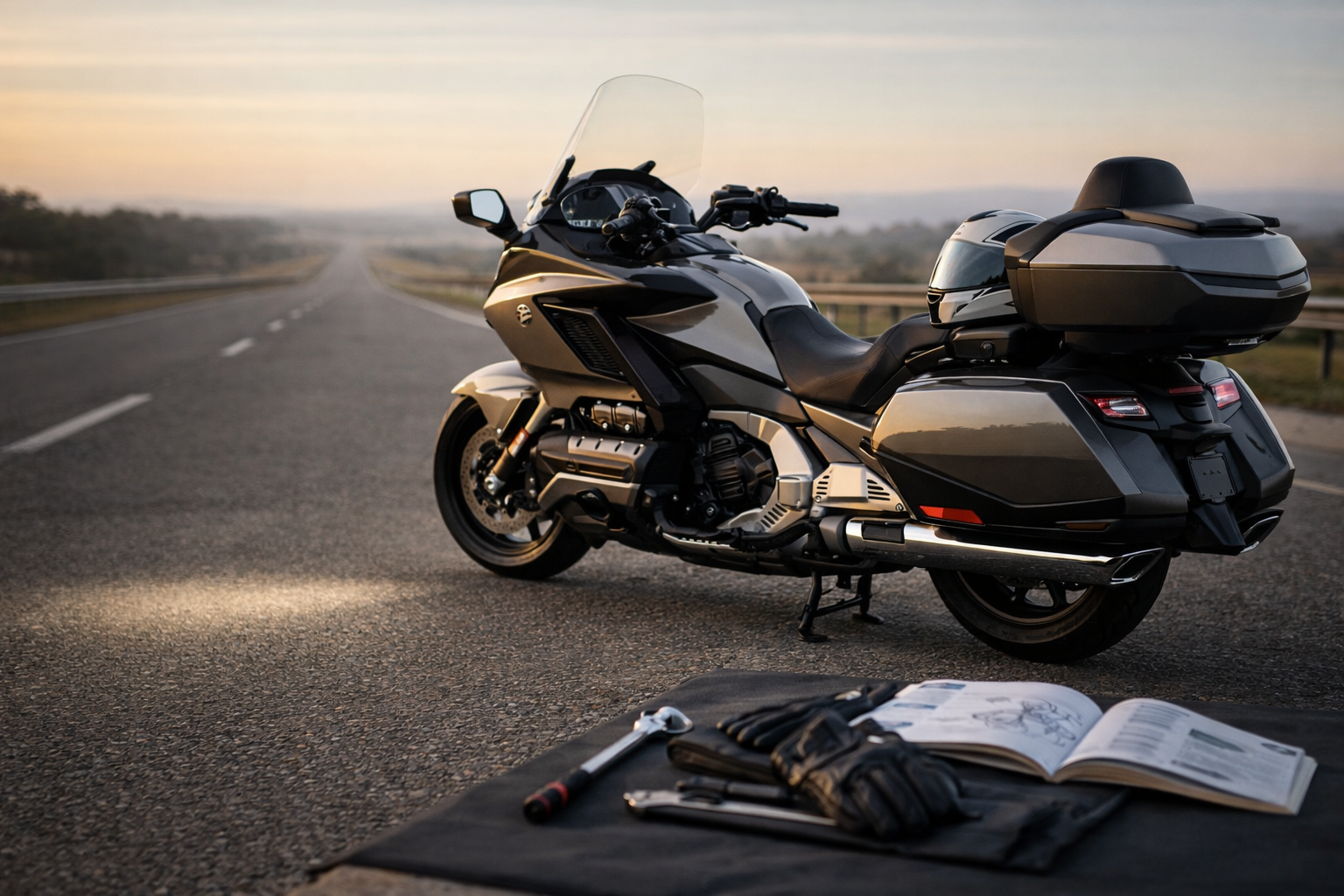
Touring bikes travel long distances to devour the miles, and they also punish small parts that are not taken care of until they become giant roadside headaches. I learned this the hard way after a night ride when a minor wear part ended the ride halfway because I skipped a proper pre-ride check and did not have the right spares, including Goldwing GL1800 parts.
Preventive planning does not mean being paranoid. It is about protecting your time, your safety, and the silent, hassle-free comfort that makes touring fun.
Why Preventive Maintenance Matters More on Touring Bikes
Touring machines are heavier, run longer, spend more time at high temperatures, and hold steady RPMs for extended periods compared to commuter bikes. Add luggage, a passenger, and long highway stretches, and you are putting continuous stress on consumables.
The goal is simple: replace predictable wear items on your schedule, not on the bike’s schedule.
A good touring maintenance plan follows three principles:
- You inspect consistently, not occasionally.
- You buy and replace based on condition and mileage, not hope.
- You carry a small pack of trip-saving spares so minor issues do not end the ride.
Build a Replacement Schedule Based on Failure Risk
Not all parts have the same urgency. Focus first on items that fail quietly, or fail in a way that causes bigger damage when ignored.
High-Risk Items to Replace Early
Brake System Wear Items
Touring bikes are heavy, and brakes do the hardest work. Pads may look fine at a glance, but they can become glazed, cracked, or wear unevenly.
Replace pads before they reach the thin edge of useful service, especially if you ride with a passenger, carry luggage, or do frequent mountain descents.
Brake fluid matters just as much. Old fluid absorbs moisture, lowering performance under heat and increasing corrosion risk inside the system. If your lever feels soft or spongy, that is not personality. It is a warning.
Tires and Valve Stems
Tires are not just about tread depth. Age, heat cycles, and heavy loading matter.
If a tire is near its age limit, the shoulders are squared off, or you see sidewall checking, replace it before a long trip. Also replace valve stems periodically. A cheap stem is not worth the risk, especially on a loaded touring bike where a slow leak becomes a safety problem fast.
Electrical Reliability and Battery Basics
Even a battery that tests “okay” can fail during touring. If starts are getting slower than normal, or the battery feels borderline, replace it before you are relying on it during fuel stops.
Clean and tighten terminals, and check for corrosion. On bikes running accessories, a weak battery can create confusing electrical symptoms that waste time to diagnose on the road.
Medium-Risk Items to Plan Ahead
These parts rarely stop you instantly, but they can ruin efficiency, comfort, and confidence over long distances. Pre-plan them so they never become a surprise.
Air Filter and Intake Maintenance
A clogged air filter reduces efficiency and can make the engine run rough. If you ride dusty roads or cover lots of highway miles, inspect it sooner than the manual suggests.
It is inexpensive insurance for steady power and better fuel economy.
Ignition Tune-Up and Spark Plugs
Spark plugs are never urgent until they are. Misfires under load, harder starts, or reduced mileage can creep in slowly.
Replacing plugs on schedule makes long-distance performance predictable and removes one more variable when you are far from home.
Coolant and Hoses
Touring bikes spend a lot of time at operating temperature. Coolant breaks down, and hoses age.
Change coolant at the recommended interval. Inspect hoses for swelling, softness, or surface cracking. One weak hose can become a major overheating event, especially in traffic jams or hot climbs.
GL1800 Touring Focus: Replace What Kills Trips
The GL1800 is known for durability, but durable bikes still wear in predictable patterns. The best approach is to treat your touring bike like a system, not a pile of separate parts.
Fluids Are Your Early Warning System
Engine oil, final drive fluid, and coolant do more than lubricate. They tell you what is happening inside the bike.
When you change fluids, look for metal sheen, unusual smell, contamination, or unexpected consumption. Those signals help you catch problems early while fixes are still simple and cheap.
Drives and Final Drive Feel
If you notice a new vibration, a change in noise, or a different feel during acceleration, do not ignore it. Touring bikes often stay “fine” until they suddenly are not.
Service and check the final drive regularly so the ride stays quiet, smooth, and stable during long highway runs.
Steering and Suspension Feedback
A wandering or vague touring bike is communicating. Worn steering components, tired fork seals, and aging bushings degrade handling over time.
The danger is you get used to the decline until a moment of surprise. Replacing suspension wear parts can make the bike feel younger, safer, and less tiring on long days.
Pre-Trip Timing: Replace Before the Tour, Not During It
Preventive replacement works best when it is tied to your travel schedule.
Two to four weeks before a major tour is ideal because you still have time to test ride and fix anything unexpected.
Pre-Trip Replacement Checklist Mindset
Think in three layers:
- Replace the items that can halt the ride.
- Maintain the items that protect expensive components.
- Refresh the things that reduce fatigue and increase confidence.
After the work, do a medium-length shakedown ride. If something is going to show up, you want it to happen close to your garage, your tools, and your preferred parts source.
My Touring Maintenance Approach
My routine is straightforward. I keep a mileage list, log service dates, and make replacement decisions based on the next ride’s distance and demands.
If a component is close to the end of its useful life and I am about to ride long distances, I replace it early. Saving money by stretching a part to the last mile is rarely worth more than a ruined trip, a towing bill, or an unplanned delay in a town you never meant to visit.
Conclusion
The real advantage of preventive maintenance planning is the touring rider’s unfair edge: fewer surprises, smoother running, and more trust in the miles you are piling up.
Replace high-risk items before they become emergencies, keep fluids and inspections consistent, and always do a post-service shakedown ride to confirm everything is solid.
If you have a reliable parts routine for your next long ride, ShinyWing can fit into that list.
FAQs
How do I know if I am replacing parts too soon?
If your replacements always look like they still have plenty of life left, and you do not see any improvement in performance, you might be too aggressive.
A better standard is condition-based inspection combined with mileage intervals, especially for brakes, tires, and fluids.
What is the most common mistake in preventive maintenance for touring riders?
Many riders focus on the big components and ignore small wear items. A small leak, weak battery, aging valve stem, or neglected fluid can ruin a tour faster than most major parts failures.
Should I replace fluids even if the bike feels fine?
Yes. Fluid breakdown is often not obvious until performance suffers. Fresh oil protects parts and also gives you a chance to spot early warning signs during routine service.
When planning a long tour, when should I service my bike?
Two to four weeks before departure is ideal. It gives you time for a test ride, parts delivery, and last-minute fixes without rushing.
Preventive maintenance feels expensive. Is it worth it if I do not tour often?
Yes. Even short rides reveal weak points, and age-related wear happens whether you commute or tour. Preventive maintenance makes the bike more dependable and safer to operate in real life.
