


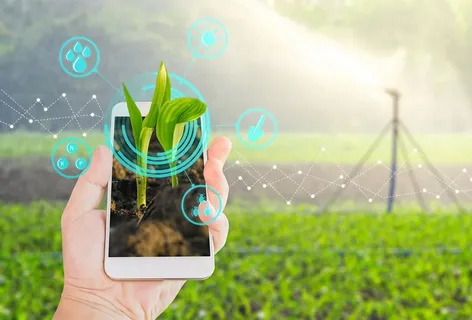
The agricultural industry is rapidly evolving, and technology is playing a significant role in transforming traditional farming practices. One of the most promising innovations in recent years is blockchain technology, which is revolutionizing how data is stored, shared, and secured in the agriculture sector. In this article, we’ll explore how blockchain is helping farmers achieve smarter, more efficient farm management and why it’s seen as a game-changer for smart agriculture.
What is Blockchain Technology?
Blockchain is a decentralized, distributed ledger technology that records transactions across multiple computers in such a way that the registered transactions cannot be altered retroactively. In simple terms, it’s a digital ledger where information is securely stored in “blocks” and linked together in a “chain,” which makes it tamper-proof.
Blockchain technology is most commonly associated with cryptocurrencies like Bitcoin, but its potential goes far beyond that, especially in sectors such as agriculture, where trust, traceability, and data integrity are essential.
Securing Data in Agriculture
In the agricultural sector, data plays a crucial role in managing everything from crop health to supply chain logistics. However, the challenge has always been ensuring that this data is accurate, secure, and transparent. Traditional systems for storing agricultural data can be vulnerable to fraud, tampering, and loss.
With blockchain, every piece of data recorded—whether it’s related to planting, fertilization, irrigation, or harvesting—can be securely stored on an immutable ledger. This means that once the data is entered into the system, it cannot be changed, offering a higher level of security and transparency compared to traditional databases.
Traceability and Transparency in the Supply Chain
One of the major benefits of using blockchain in agriculture is its ability to enhance transparency and traceability throughout the supply chain. Consumers today are more concerned than ever about the origin of their food, and blockchain can provide an easy-to-access, tamper-proof record of a product’s journey from farm to table.
For example, blockchain can record every stage of a crop’s life cycle—whether it’s organic certification, pesticide use, or transportation—and this data can be accessed by everyone from farmers to consumers. This traceability is crucial for ensuring food safety, maintaining quality standards, and building consumer trust.
Enhancing Farm Management with Blockchain
Blockchain can also play a key role in optimizing farm management by enabling more accurate decision-making. For instance, farmers can use smart contracts—automated agreements stored on the blockchain—to streamline transactions with suppliers, buyers, and service providers.
These contracts automatically execute when certain conditions are met. For example, a farmer can set up a contract to automatically release payment to a supplier once a shipment of seeds is delivered. This not only reduces administrative burdens but also minimizes the risk of human error and delays.
Additionally, by securely storing data on a blockchain, farmers can create a digital record of all farming practices, enabling better analysis and future planning. Whether it’s tracking soil conditions, weather patterns, or yield history, blockchain can provide farmers with a wealth of actionable data to optimize their operations.
Reducing Fraud and Ensuring Fair Payments
Blockchain’s transparency also reduces the risk of fraud in the agricultural industry. By having a public, immutable record of transactions, all parties in the supply chain can be confident that the data is accurate and that payments are made fairly and transparently.
For example, when farmers sell their produce to distributors, the payment terms can be secured and executed through smart contracts. This ensures that farmers receive fair compensation without delays or disputes. In addition, blockchain can help verify the authenticity of certifications and labels, ensuring that products are not falsely marketed as organic or sustainably sourced.
Challenges and Future Prospects
Despite its many advantages, the adoption of blockchain in agriculture does come with challenges. The technology is still relatively new in the sector, and there are concerns about the scalability of blockchain networks for large-scale agricultural operations. Additionally, integrating blockchain with existing systems and ensuring that farmers have the necessary technical skills to use the technology can be hurdles to widespread adoption.
However, as blockchain technology continues to mature, it’s likely that these challenges will be addressed. Many organizations and startups are already working on making blockchain solutions more accessible to farmers, and governments may offer support to incentivize adoption in the future.
Conclusion: Blockchain as a Pillar of Smarter Agriculture
In summary, blockchain in agriculture has the potential to revolutionize farm management by providing a secure, transparent, and efficient way to store and share data. From enhancing traceability in the supply chain to enabling smarter farm management practices, blockchain is helping to build a more secure and sustainable agricultural ecosystem. As the technology matures and becomes more accessible, it’s likely to play a central role in shaping the future of agriculture.
